market
Why Sydney's Eastern Suburbs Defied Every Forecast
While economists predicted a market correction, Vaucluse, Double Bay and Bellevue Hill quietly posted their strongest quarter in three years.
By Juliet Hammond · 8 June 2026 · 6 min read
market
While economists predicted a market correction, Vaucluse, Double Bay and Bellevue Hill quietly posted their strongest quarter in three years.
By Juliet Hammond · 8 June 2026 · 6 min read

The consensus heading into the first half of 2026 was almost uniformly cautious. Elevated interest rates, a softening in outer-ring suburbs, and a global mood that seemed to price in disappointment before breakfast — all of it pointed to a year of managed retreat for Sydney’s most prestigious residential pockets. The models said so. The brokers said so, at least the ones who spoke publicly. And then the eastern suburbs simply ignored the memo.
Sales volumes across Vaucluse, Double Bay, Bellevue Hill and Rose Bay in the March and June quarters have come in well above 2025’s comparable period, with median prices in the $6 million to $12 million band holding firm and, in several tightly held streets, appreciating quietly. The divergence from the broader metropolitan pattern is now significant enough that analysts are scrambling for an explanation.
The simplest answer is also the most durable: there is no new land in the eastern suburbs. The foreshore lots are finite, the heritage overlays are sweeping, and the local council’s appetite for uplift is — to put it generously — restrained. When you cannot build more of something, its price does not respond to interest rates the way a greenfield estate in Oran Park does.
What has changed in the past eighteen months is the composition of buyers. The purely speculative purchaser, the investor stacking apartments for yield, has largely stepped aside. What remains is a cohort that property advisers describe, with only slight irony, as “strategic lifestyle buyers” — often dual-income professional couples in their late forties or early fifties who made their wealth in finance, technology or law, and who have concluded that the next decade of their lives will be lived better with a garden in Rose Bay than with another Sydney Olympic Park leasehold.
“The buyers we’re seeing aren’t waiting for conditions to improve. They’ve decided that the eastern suburbs is where their family life will happen, and they’re buying on that conviction rather than on a rate forecast.”
That conviction, repeated across enough transactions, creates its own floor. It also means that the typical sensitivity analysis — if rates rise 50 basis points, demand contracts by X — simply does not apply here the way it does elsewhere in the city.
A secondary driver, harder to quantify but consistently cited by agents, is the extraordinary proportion of eastern-suburbs transactions that never reach any portal. Estimates from selling agents in the $8 million-plus bracket suggest that as many as 60 per cent of exchanges in the past two quarters were completed without a public campaign. The vendor avoids disruption; the buyer avoids competition. Both parties benefit from a negotiated process that keeps the asset — and its price — away from external scrutiny.
This opacity has a market-distorting effect that tends to understate how much activity is actually occurring. When integrity surveys sample only publicly listed transactions, they see a subdued market. What they do not see is the quietly agreed sale of a five-bedroom Federation house in Woollahra to a returning expat who dealt directly through a buyer’s agent, at a price that would have set a street record if it had appeared on any database.
The aggregated figures, when adjusted for the dark pool, paint a different picture from what the headline indices suggest. Auction clearance rates in the eastern suburbs have consistently outperformed the metropolitan average by eight to twelve percentage points this year, and the average days-on-market for properties priced above $5 million has contracted from 58 days in the corresponding period of 2025 to 41 days — a shift significant enough to matter in a market where patient vendors are the norm.
Infrastructure is also playing a role that was underestimated. The completion of the eastern suburbs metro link has reduced the commute friction that once made the inner west or the north shore more pragmatic choices for working professionals. The eastern suburbs used to carry a lifestyle premium offset by a connectivity discount. That discount is now substantially erased.
None of this means the market is without nuance. Properties that are poorly presented, overpriced for their street, or encumbered by adverse easements are still sitting. The market is not rising indiscriminately — it is rising selectively, rewarding genuine quality and penalising complacency. But the forecast of decline, the patient expectation that the correction would finally reach these suburbs, has simply not been borne out. The eastern suburbs, as they have done before, found a way to be the exception.
More from market
market
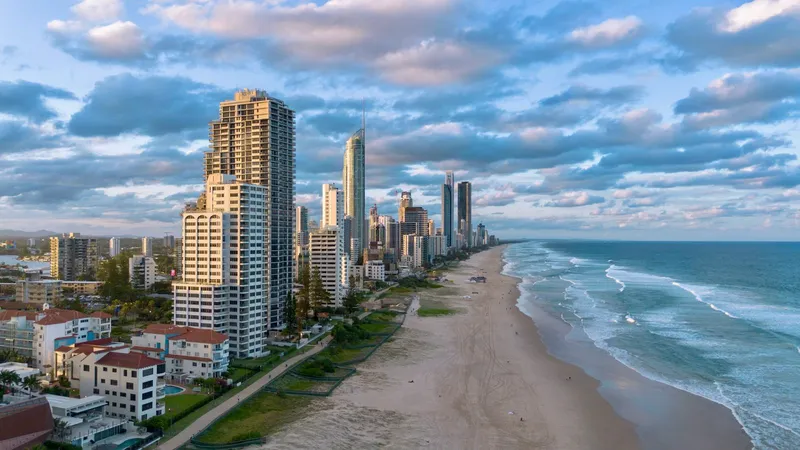
A new generation of ultra-high-net-worth buyers is quietly assembling trophy holdings along a stretch of Broadbeach and Surfers Paradise waterfront that the market is only beginning to understand.
Harriet Vance · 30 May 2026 · 5 min

market
Far from the open-home crowds, a patient recalibration in Toorak, South Yarra and Armadale is producing results that contradict the prevailing narrative.
Tobias Wren · 4 June 2026 · 5 min